Concrete is tougher than almost anything else you can put on the ground, and Rochester still finds a way to test it. We get long freeze and thaw seasons, road salt tracked up every driveway from November onward, and plows and shovels scraping the same surfaces all winter. Sealing is the one piece of maintenance that meaningfully changes how concrete handles all of that.
Here is what sealing actually does, when to do it in this climate, what can be sealed, and how to tell when yours is due.
Why Sealing Matters More Here Than in Most Places
Concrete looks solid, but the surface is slightly porous. It takes on water. In a mild climate that is close to harmless. In Rochester, water that soaks into the top layer freezes, expands, and pushes outward from inside the surface. Do that a few dozen times a winter, every winter, and the top layer starts to give up.
Road salt makes it faster. Salt keeps water liquid at lower temperatures, which means more freeze and thaw cycles inside the concrete rather than fewer, and the chlorides themselves are hard on the cement paste that binds everything together. Between the two, unsealed concrete in this region takes more punishment in one winter than sealed concrete takes in several.
A sealer works by closing off or coating that porous top layer so the water mostly stays on top, where it belongs, and runs off.
The Best Time of Year to Seal in Rochester
Early autumn is the sweet spot, and it is a narrower window than most people expect.
Sealers need reasonable temperatures and dry concrete to cure properly. Once nights get cold and morning dew stops burning off, conditions stop cooperating. That effectively puts the end of the season somewhere in October most years, earlier in a cold one. Waiting until you can see winter coming usually means waiting until it is too late to seal.
September and early October also happen to be after the summer has done its worst. The surface has been through months of sun and heat, and you are sealing it right before the season that actually threatens it. If you only seal once in a cycle, that is when to do it.
Spring sealing is possible and better than not sealing at all, but it protects your concrete through the mild half of the year and leaves it bare through the hard half.
What Can Be Sealed
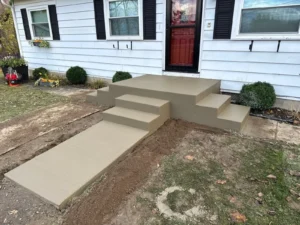
Most exterior flatwork is a candidate. A concrete driveway is usually the highest priority in this climate, because it takes the salt, the plow and the most traffic. After that come sidewalks and walkways, which get shovelled and salted more aggressively than anything else on a property, then the patio, steps, porches, pool decks and garage floors.
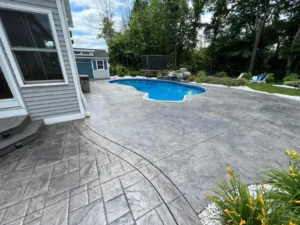
Stamped concrete is its own case. The colour and the pattern are part of the surface, so the sealer is not only protecting the concrete, it is protecting the finish you paid for and keeping the colour looking the way it did on day one. Stamped surfaces are the ones where letting the sealer lapse shows up fastest and most visibly.
Sealing New Concrete Versus Resealing Older Concrete
New concrete needs to cure before it is sealed. That is a matter of weeks, not days, and it is worth being patient about, because sealing too early traps moisture that is still working its way out.
Older concrete is a different job. Sealer wears off gradually under traffic, sunlight and weather, so any surface that was sealed a few years ago is running on whatever is left. Resealing usually means cleaning the surface properly first, dealing with anything that has stained or grown into it, and then applying fresh sealer to concrete that is genuinely ready to take it. Most of the work is in the preparation. Sealer applied over a dirty or damp surface will not bond the way it should, and it will not last.
This is the same process behind our concrete recoloring and resealing work, where restoring the colour and protecting the surface happen together on concrete that has faded but is otherwise sound.
How to Tell Yours Is Due
The quickest check takes about five seconds. Pour a cup of water on the surface. If it beads and sits there, the sealer is still doing its job. If it soaks straight in and leaves a dark patch, there is nothing left protecting that concrete.
Other signs worth reading:
- The colour has gone flat or chalky compared with how it looked when it was new
- Stamped or coloured concrete has lost its depth and looks washed out
- Oil, leaf and rust marks are staining more easily and coming out harder
- The surface feels rougher underfoot than you remember
- You genuinely cannot remember the last time it was sealed
As a rule of thumb, exterior flatwork in this climate wants resealing every few years, and driveways and stamped surfaces sit at the shorter end of that range because they take the most abuse.
What Sealing Will Not Do
Sealing is protection, not repair. It will not close an existing crack, lift a slab that has settled, or rebuild a surface that has already lost its top layer. Sealing over damage just puts a finish on top of the problem.
If the surface is already flaking, pitting or cracking, that is concrete repair territory, and the honest sequence is to deal with the damage first and seal afterwards so the repair is protected too. We will tell you which of the two you are actually looking at rather than selling you the easier one.
Frequently Asked Questions
How often should concrete be sealed in Rochester?
Every few years for most exterior concrete, with driveways and stamped surfaces at the shorter end because they take the most salt, traffic and sun. Rather than working to a fixed schedule, use the water test. If water soaks in instead of beading, it is due regardless of how long it has been.
Is it too late to seal my concrete in the fall?
It depends on the weather rather than the date. Sealers need dry concrete and reasonable temperatures to cure, so the window usually closes sometime in October once nights turn cold and morning damp stops clearing. If you are thinking about it in September, you are in good time. If you are thinking about it in late October, call and we will tell you honestly whether conditions still allow it or whether spring is the better plan.
Can you seal concrete that already has salt damage?
Not as a fix. Sealing protects a sound surface; it does not restore one that has already lost its top layer. Where damage is limited, the usual sequence is to repair the affected area first and then seal the whole surface so the repair is protected alongside everything else. We will look at it and tell you which you need.
Does sealed concrete get slippery in winter?
It can if the wrong product goes down on the wrong surface, which is why it matters what gets used and where. On walkways, steps and pool decks we account for traction as part of the job rather than treating it as an afterthought. Tell us where the surface is and how it gets used and that gets factored in.
How soon can new concrete be sealed?
It needs to cure first, which is a matter of weeks rather than days. Sealing too early traps moisture that is still leaving the slab. If we poured it, we will tell you when it is ready.
If you are not sure whether your driveway, patio or walkway is due, we will take a look and tell you straight. Serving Rochester, Fairport, Pittsford, Webster, Penfield, Greece, Irondequoit and the surrounding towns.