If the surface of your concrete has started flaking, pitting, or shedding a thin layer of grit every time you sweep it, the first question is not what it costs to replace. It is whether you need to replace it at all. A lot of the concrete we look at around Rochester has a worn out surface sitting on a slab that is structurally fine, and those two things have very different answers.
Here is how we tell the difference, and what resurfacing can and cannot do.
What Concrete Resurfacing Actually Means
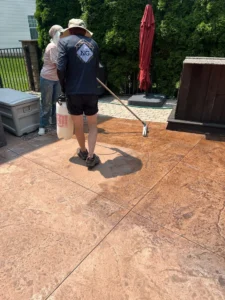
Resurfacing means bonding a new wearing surface onto concrete you already have, instead of breaking the old slab out and pouring a new one. The material that goes down is called an overlay, which is why you will see the two words used almost interchangeably. An overlay is the product. Resurfacing is the job.
Done properly it is not a skim of patch mix troweled over a bad surface and hoped for. The existing concrete has to be cleaned and mechanically profiled so the new layer has something to grip, any loose or delaminated material has to come off first, and the overlay has to be worked while it is bonding. Skip the prep and the overlay releases from the slab in sheets, usually after the first winter, and you are worse off than when you started.
The Question That Decides Everything: Is the Base Sound?
Concrete fails from the top down or from the bottom up, and the fix is completely different depending on which one you have.
Top down means the surface has worn, spalled, or scaled while the slab underneath is still solid and still sitting where it was poured. That is the case resurfacing was made for.
Bottom up means the ground under the slab has moved, washed out, or was never compacted properly. An overlay does nothing for that. You would be bonding a new surface to something that is still sinking. When the substrate or the base is what is failing, full replacement is the honest answer, and we will tell you that rather than sell you a topping that buys a season.
Spalling and Scaling: the Damage Overlays Are For
Spalling is when chunks and flakes break away from the surface, often leaving shallow craters with exposed aggregate at the bottom. Scaling is the flatter version, where the top skin peels off in patches and leaves a rough, sandy texture behind.
Both are surface conditions. Both are extremely common on Rochester driveways, garage aprons, sidewalks, and porches, and both are usually a good sign in one narrow sense: the damage stopped at the top. If the slab is still holding load and still sitting at grade, a properly bonded overlay gives you a new surface without the cost and disruption of a full tear out.
What an Overlay Will Not Fix
This is the part most articles leave out, so here it is plainly.
An overlay will not stop a crack that is still moving. Cover a working crack and it telegraphs straight through the new surface, usually within a year, in exactly the same line. It will not lift a slab that has settled. It will not rescue concrete that is crumbling all the way through rather than just at the surface. And it will not correct drainage that is running water where it should not go, which is often the reason the surface failed in the first place.
If any of those describe your concrete, resurfacing is the wrong tool and we would rather say so on the first visit.
Settled Slabs Are a Different Repair Entirely
If the problem is that a section has dropped, so you have a lip at a joint or water pooling where it used to run off, that is a leveling job rather than a surface job. Slabs like that can often be lifted back to grade through mudjacking or foam leveling, without breaking out the existing concrete at all.
It is worth knowing both options exist, because a settled but otherwise sound slab gets written off as needing replacement far more often than it should.
Cracks Are a Third Thing Again
Cracks sit in their own category. Where the slab still carries load, cracks can be stitched and epoxy injected rather than replaced, which restores the connection across the break instead of just filling the gap cosmetically. That work sits alongside the rest of our masonry and concrete repair, and it is frequently what a surface problem turns out to actually need once someone looks closely.
Why Rochester Winters Decide This
Concrete here does not fail the way it fails in a mild climate. Water gets into the surface, freezes, expands, and pushes a little material loose. Then it thaws and does it again. We run through that cycle repeatedly every winter, not once, and road salt tracked up a driveway accelerates the whole process by keeping brine in the pores longer.
Two practical consequences. First, surface damage in this region is usually freeze thaw and salt rather than a sign the slab was poured badly, which is why so much of it is genuinely resurfaceable. Second, timing matters. An overlay needs reasonable temperatures to bond and cure, so this is warm season work, and the closer you get to the end of the season the more the schedule decides for you.
What Happens When We Come Out
We walk the site and look at the actual failure rather than quoting off a photo. Is the surface loose, and how deep does it go? Is the slab sitting where it was poured? Are the cracks static or working? Where is the water going?
Then we quote both the repair option and the replacement option and let you choose. Sometimes the honest recommendation is the cheaper one, and you should hear that from us rather than find out in two years. Estimates are free and nobody is going to lean on you.
After the Surface Is Back
A resurfaced slab is new concrete at the wearing surface, and it deserves the same protection any new pour does. Sealing it before the cold arrives is what keeps meltwater and road salt from starting the same cycle over again, and it is the single cheapest thing you can do to make the work last.
If appearance is part of why you are looking at this, recoloring and resealing is worth a look as well, particularly on a surface that is sound but tired. And if the answer does come back as replacement, that is ordinary work for us, whether it is a driveway or a concrete patio.
Common Questions About Concrete Resurfacing
Is concrete resurfacing the same as a concrete overlay?
They describe the same job from two directions. The overlay is the new material bonded onto your existing concrete. Resurfacing is the process of putting it there. If a contractor quotes you an overlay, they are quoting you a resurfacing job.
How do I know if my concrete can be resurfaced instead of replaced?
The deciding factor is whether the damage is at the surface or underneath it. If the slab is still sitting at grade and still carrying load, and the problem is flaking, pitting, or a peeling top layer, it is usually a resurfacing candidate. If it has settled, if cracks are still moving, or if the base beneath it has washed out or was never compacted, an overlay will not hold and replacement is the right call. It takes someone on site to tell which you have.
Will resurfacing hide the cracks in my driveway?
Only if the cracks are stable. A crack that is still moving will reflect through a new overlay in the same line, usually within a year. Cracks that are static, or that can be stitched and epoxy injected first while the slab still holds load, are a different situation. Covering a working crack without addressing it is the most common way a resurfacing job fails.
Why does concrete spall and flake so badly in Rochester?
Freeze thaw cycling plus road salt. Water works into the surface, freezes, expands, and lifts material loose, and we go through that cycle repeatedly every winter rather than once. Salt tracked up from the road keeps brine sitting in the pores and speeds it up. It is a surface attack, which is exactly why so much spalled concrete in this area is a resurfacing candidate rather than a replacement.
What time of year should concrete resurfacing be done?
Warm season work. An overlay needs workable temperatures to bond and cure properly, so it is not something to push into late autumn in this climate. If you are looking at a surface that got noticeably worse over the last winter, the sensible move is to get it looked at early rather than at the end of the season when the calendar makes the decision for you.
Not sure which one you are looking at? We will come out, look at the actual concrete, and quote both the repair and the replacement so you can decide with real numbers in front of you. Serving Rochester and the surrounding towns.