Almost every block foundation in Rochester has a crack somewhere. Most of them are old, stable, and nothing to lose sleep over. A few are the early sign of a wall being pushed in by the soil behind it, and those get more expensive every winter they are left. The trick is telling the two apart.
This guide walks through what the common crack patterns in a block wall usually mean, how to tell if a wall is bowing, and how the repair or rebuild decision gets made.
Why Block Walls Crack Here
A block foundation is a wall of hollow units held together by mortar joints. It is very strong pushing straight down and much weaker when something pushes on it from the side. In this area the side pressure comes from the soil around the house: wet ground is heavy, saturated clay pushes harder, and when that water freezes it pushes harder still. Poor drainage makes all of it worse, which is why so many foundation problems trace back to a downspout, a grade that slopes toward the house, or water with nowhere to go.
Settlement is the other cause. If part of the footing under the wall sinks a little more than the rest, the wall cracks to follow it.
Vertical Cracks
A crack that runs straight up and down, often near the middle of a wall or under a window, is usually the least worrying kind. Many come from the wall shrinking slightly as it cured or from minor settling years ago. Watch it for width and for water. A hairline vertical crack that stays the same size and stays dry is mostly a sealing job. One that is getting wider, or that is wider at the top than the bottom, is the wall telling you something is moving.
Stair Step Cracks
A crack that zigzags up through the mortar joints like a staircase follows the weakest path through the wall. It usually means a corner or section has settled, or that the wall is starting to move under pressure from the soil. A thin step crack that has not changed in years can be old settlement. A step crack that is opening up, or where the blocks on one side sit out of line with the other side, needs a proper look. The same pattern shows up in brick walls, and our brick repair guide covers it from the brick side.
Horizontal Cracks: The One to Take Seriously
A long crack running sideways along a mortar joint, often a few courses down from the top of the wall or about halfway down, is the classic sign of soil pressure pushing the wall inward. The wall is bending at that joint. This is the crack pattern most likely to keep getting worse, because the soil and frost that caused it come back every year.
A horizontal crack is not a reason to panic, and plenty of walls with one are repaired without being rebuilt. It is a reason not to wait. Sealing it on its own does not stop the pressure that made it.
How to Tell if a Wall Is Bowing
Stand at one end of the wall and sight along it, or hold a long straightedge or a tight string against the face. A wall that has started to bow curves inward, usually most at the horizontal crack. Other signs are a wall that leans in at the top, blocks shifted so their faces no longer line up, and gaps opening where the wall meets the floor joists or sill above it.
It also helps to know whether anything is changing. Mark both ends of a crack with a pencil line and the date, take a photo with a tape measure across it, and check again after the next freeze and again after the thaw. A crack that grows over one winter is active. One that has not moved in a year is a different conversation.
Water Coming Through the Cracks
Damp patches, white chalky staining, or water on the floor along a crack mean water is getting through the wall. That is worth fixing on its own, and it is also the clue to the cause: the same water that leaks in is adding weight and frost pressure on the outside. A crack repair that does not deal with the drainage behind the wall is treating the symptom.
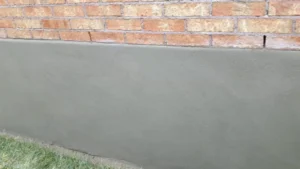
The gray coat on the outside of many foundations, called parging, often cracks first and gets blamed for the leak. Our guide to foundation parging and skim coating explains when that coat is the problem and when it is only showing you the wall behind it.
Repair or Rebuild?
Most cracked and bowing block walls in older Rochester homes can be repaired without a full rebuild. Depending on the cause and how far it has gone, that means sealing and stitching the cracks, reinforcing the wall so it stops moving, and correcting the drainage or water that caused the pressure in the first place.
Rebuilding a section makes sense when the wall has moved too far to hold reliably, when blocks have sheared or shifted badly out of line, or when the same section has already been repaired and kept moving. In those cases the failed part of the wall comes out and is rebuilt properly, and the cause behind it is dealt with so the new wall does not face the same conditions. For a wall that has moved a lot, having a structural engineer look at it as well is money well spent.
The honest answer always depends on what is happening behind the wall, which is why we walk the foundation, explain what we see, and quote both options when both are reasonable. Our block foundation repair work covers crack repair, reinforcing walls, and basement wall replacement across Rochester and the surrounding towns.
What to Do This Winter
Winter is when frost pressure on a foundation is at its worst, so it is a good time to watch and a bad time to ignore. Mark and photograph every crack now. Keep downspouts running well away from the house and keep snow from piling against the foundation where it melts straight into the soil. Check the marks after the thaw. If a crack grew, a wall looks more curved than it did, or water is coming in where it was not before, get it looked at before the next winter adds to it.
Common Questions About Foundation Cracks
Are cracks in a block foundation normal?
Small cracks are common, especially in older homes, and many are old and stable. What matters is the pattern, the width, and whether it is changing. Fine vertical cracks that stay the same size are usually minor. Horizontal cracks, cracks that are getting wider, and walls that bow inward need a closer look.
What does a horizontal crack in a basement wall mean?
It usually means soil pressure is pushing the wall inward and the wall is bending at that joint. Wet, heavy soil and frost are the common causes here. It is the crack pattern most likely to keep getting worse, so it should be looked at rather than just sealed.
Can a bowing foundation wall be repaired?
Often, yes. Most bowing block walls can be repaired by reinforcing the wall so it stops moving and correcting the drainage that caused the pressure. When a wall has moved too far or failed structurally, the damaged section is rebuilt instead.
How do I know if a foundation crack is getting worse?
Mark both ends of the crack with a pencil line and the date, and photograph it with a tape measure across it. Check again after a freeze and after the thaw. If the crack has grown longer or wider, or the wall looks more curved, it is active and should be looked at.
Will sealing a foundation crack fix it?
Sealing stops water coming through a stable crack. It does not stop a wall that is still moving. If the crack is horizontal, growing, or the wall is bowing, the cause has to be dealt with first, usually water and drainage, and the wall reinforced or rebuilt where needed.
Worried about a crack or a wall that looks bowed? We will walk the foundation with you, explain what we see, and tell you honestly whether it is a repair or a rebuild. Estimates are free. Contact us to get on the schedule. Serving Rochester and the surrounding towns.