Walk around almost any house in Rochester with a block foundation and you will find a gray cement coat on the part of the wall above the ground. That coat is called parging, and sooner or later most homeowners notice it cracking, flaking, or falling off in chunks. Sometimes that is just a tired surface coat. Sometimes it is the first visible sign of a problem in the wall behind it.
This guide covers what parging and skim coating are, what they do and do not do, why they fail here, and how to tell whether you need a patch, a new coat, or a closer look at the foundation.
Parging and Skim Coating Are the Same Thing
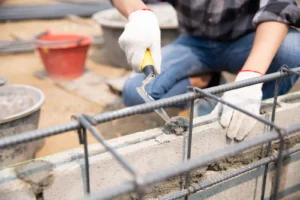
You will hear both names. Parging, a parge coat, and block skim coating all describe a thin cement based coat troweled over a concrete block wall. Homeowners usually say parging when they mean the coat on a foundation. Contractors often say skim coating when the goal is a finished look on any block wall.
Either way, it covers the block joints and the rough face of the block with one smooth surface. On a foundation it is what makes the exposed wall look like poured concrete instead of a grid of blocks and mortar lines.
What Parging Does and What It Does Not Do
A good parge coat gives exposed block a clean, finished look, protects the face of the block and the mortar joints from direct weather, and helps the wall shed rain and splashback instead of soaking it up through every joint.
Two things it does not do are worth knowing before anyone sells you a fix. Parging is not waterproofing. If water is coming through your basement walls, a new coat on the outside above grade will not stop it, because the water is getting in below grade. And parging is not structural. It adds no strength to the wall. A coat troweled over a wall that is cracking or moving will crack in the same place, usually within a season.
Why Parging Cracks and Falls Off in Rochester
Almost every parging failure comes back to water and freezing. The most common causes:
- Water getting behind the coat. Soil graded toward the house, a downspout dumping at the foundation, or a gutter overflowing onto the wall all keep the block wet. Water behind the coat freezes and pushes it off.
- Poor bond. Parging applied over dirty, painted, or already loose material has nothing solid to grip, and it lets go once winter works on it.
- A new coat over a failing one. Skimming fresh parging over old parging that has already let go only hides the problem for a winter or two. When the old coat comes off, the new one comes with it.
- Freezing before it cured. Cement based coats need to cure without freezing. A coat put on too late in the fall can look fine at first and then start scaling in spring.
- Movement in the wall behind it. If the block wall itself is cracking or shifting, the parging is just the messenger.
That is why surface level fixes have such a short life here. A patch that ignores where the water is coming from will be back to where it started after a few freeze and thaw cycles.
Hairline Cracks or Cracks That Go Through the Block?
Fine, random hairline cracks in the parging itself, often in a spider web or map pattern, are usually just the surface coat aging. They are cosmetic, though open cracks let water in behind the coat and speed up the next failure.
A crack that runs in a straight line or steps up through the block joints is different. Peel back the loose parging along it and look at the block underneath. If the crack continues through the block or the mortar behind the coat, the wall moved, and that is a foundation question before it is a parging one. The same goes for a wall that bulges, leans, or has a horizontal crack running along it. Our guide to block foundation repair and construction covers what happens when the wall itself needs attention, and our brick repair guide explains what stair step cracks usually mean.
Patch It or Redo the Whole Wall?
Tap the parging with the handle of a screwdriver along the length of the wall. Sound parging gives a solid knock. Parging that has let go of the block sounds hollow, even where it still looks intact.
If the hollow areas are small and the rest of the coat is solid, the loose sections can be removed back to sound material and patched. If the coat sounds hollow across most of the wall, or it has been patched several times already, the right answer is to remove it down to the block and apply a new skim coat. A patch on a coat that is failing everywhere just moves the next failure a few feet over.
What a Proper Skim Coat Job Involves
The coat you see is the last step, not the job. Done properly, loose and failing material comes off down to sound block. Cracked block gets sealed and reinforced and damaged block gets replaced before anything goes over it, because a skim coat over a damaged wall is a short term cover. The surface is cleaned so the new coat can bond, and the coat is troweled on and finished to the look you want, from a smooth poured concrete look to a stucco style texture.
It is also worth fixing whatever put water on the wall in the first place. A new coat on a foundation where the downspout still empties against the block is starting its life in the same conditions that ruined the last one.
Block skim coating is part of our masonry repair work on basement walls, garage walls, and block foundation walls across Rochester and the surrounding towns.
Skim Coating New Block Walls
Skim coating is not only a repair. On new construction it lets you build with block, which is strong and cost effective, and still finish the wall with the look of poured concrete or stucco. Common uses are foundation walls that show above grade on a new home or addition, garden walls, and exposed block on garages and outbuildings, anywhere the clean look of the wall matters as much as its strength.
Not the Same as Concrete Resurfacing
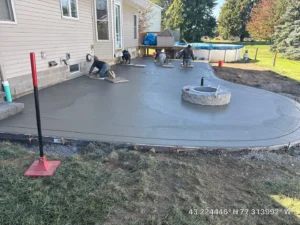
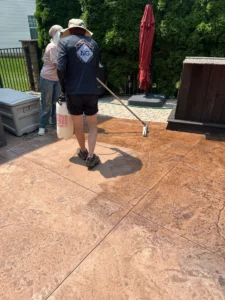
People sometimes mix the two up because both are thin cement coats. Skim coating is for vertical block walls. Resurfacing is for flat concrete you walk or drive on, like patios, walkways, and steps, and it uses different materials built for foot traffic. If your problem is a worn or scaled slab rather than a wall, our guide to concrete resurfacing is the one to read.
When to Get It Looked At
Parging needs to cure without freezing, so skim coating is warm season work in Rochester. Late fall is the time to look, not to apply. Walk the foundation now, tap the coat, photograph anything that is cracked, hollow, or coming off, and note where water lands on the wall when it rains. Check the same spots after the thaw. Damage that grew over one winter shows you exactly where the water is getting in, and getting on the schedule early means the work happens in spring instead of after another season of freezing.
Common Questions About Parging and Skim Coating
What is the difference between parging and skim coating?
There is no real difference. Both describe a thin cement based coat troweled over a concrete block wall to give it a smooth, finished surface. Homeowners tend to call the coat on a foundation parging, and contractors often call it block skim coating when the goal is a finished look on any block wall.
Is parging waterproofing?
No. Parging protects the exposed face of the block and helps the wall shed water, but it is not a waterproofing system. If water is coming into your basement, it is usually getting in below grade, and a new coat on the wall above the ground will not stop it.
Why is the parging falling off my foundation?
In Rochester it is almost always water and freezing. Water gets behind the coat from grading, downspouts, or gutters, freezes, and pushes it off. Poor bond to the block, a new coat applied over an old failing one, and a coat that froze before it cured are the other common causes. If the wall behind it is cracking or moving, the parging will keep failing until that is addressed.
Can you parge over cracked block?
You can, but it will not last. A skim coat adds no strength, so a crack in the block behind it comes straight back through the new coat. Cracked block should be sealed and reinforced, and damaged block replaced, before a new skim coat goes on. If the crack is widening or the wall is bowing, the foundation needs to be looked at first.
Can parging be done in the winter?
Not well. A cement based coat needs to cure without freezing, so parging and skim coating are warm season work here. Winter is a good time to spot problems and get on the schedule so the work can happen in spring.
Parging cracking or coming off your foundation? We will come out, look at the coat and the wall behind it, and tell you whether it needs a patch, a new skim coat, or the block looked at first. Estimates are free. Contact us to get on the schedule. Serving Rochester and the surrounding towns.