If you're looking for a durable and visually appealing option for your outdoor living space in Rochester, NY, choosing a stamped concrete patio offers the perfect blend of functionality and aesthetic appeal. Stamped concrete not only provides a wide range of design possibilities but also requires minimal maintenance, making it a long-term investment in your home's outdoor environment.
That is the short version. Here is the longer one, including the parts a contractor does not always volunteer.
What a Stamped Concrete Patio Actually Costs in Rochester
Stamped concrete lands above plain broom-finished concrete and below natural stone or high-end pavers. That middle position is most of its appeal, and it is also where most of the confusion lives, because the range is wide enough that two honest quotes can look very different.
What moves the number: the size of the pour, how much demolition and haul-away the site needs, how far the truck can get from the pour, the pattern, and how many colors you want. A simple ashlar pattern in two colors on a flat, accessible backyard is a very different job from a multi-level space with a complex border on a lot the truck cannot reach.
We publish real Rochester numbers rather than national averages, because national averages are close to useless here. Our concrete patio cost guide breaks down what drives the price and what a typical local project runs.
One thing worth saying plainly: the cheapest stamped concrete quote you get is usually cheap somewhere you cannot see. Base preparation and slab thickness are the two places corners get cut, and they are the two things that decide whether the patio is still flat in ten years. You will not be able to tell the difference on day one. You will on year five.
Stamped Concrete vs a Plain Concrete Patio
This is the comparison most people are actually making, and it is a smaller gap than people expect.
Structurally, they are the same patio. Same base preparation, same thickness, same control joints, same concrete. The difference is the finish: a broom finish is a texture applied with a broom, and a stamp is a pattern pressed in with a mat plus color. The slab underneath is identical, which is why the price difference is smaller than the visual difference.
So the honest framing is not "is stamped better." It is "is the finish worth the upcharge to you." A broom finish is a perfectly good patio and we pour plenty of them. If the patio is behind the house, mostly under a table, and you would rather put the money into the furniture, broom is the right call and we will tell you so.
Stamped earns its money when the surface is part of the view: visible from the kitchen window, connected to an entry, or large enough that a blank gray field would read as unfinished. If you want the build details either way, our concrete patios page covers the process.
Stamped Concrete vs Pavers
The other real comparison, and the short version is this: pavers are individual units set on a base, stamped concrete is one continuous slab. Almost every practical difference follows from that one fact.
Individual units can shift, settle unevenly, and grow weeds in the joints, and they can also be lifted and reset one at a time. A continuous slab does none of those things, good or bad. It will not weed and it will not go wavy, and if it ever does crack, you are repairing a slab rather than replacing a paver.
In Rochester specifically, the freeze-thaw cycle is what tips this for most people. Forty-plus freeze-thaw cycles a winter is exactly the condition that works joints loose over time. We have covered the full side-by-side on cost, durability, and maintenance in our stamped concrete vs pavers comparison, so we will not repeat it here.
How a Stamped Patio Holds Up Through Rochester Winters
This is the part that decides whether you are happy in year eight, and it is the part national guides cannot help you with, because they are not written for a climate that does this.
A properly built stamped patio handles our winters without drama. "Properly built" is doing real work in that sentence, and it means three things: a compacted base that drains rather than holding water, correct thickness, and control joints placed so the slab cracks where you decided instead of where it decides.
Water is the whole problem. Water gets into concrete, freezes, expands, and does it again forty times a winter. Everything about good concrete work here is really about controlling water: draining the base, sealing the surface, and not trapping it anywhere.
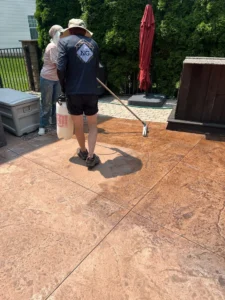
Two things are on you after we leave. Reseal every two to three years, because the sealer is the sacrificial layer and a tired one is what makes good color look chalky. And go easy on the de-icers. Rock salt is hard on concrete, and de-icers with ammonium nitrate or ammonium sulfate are worse, because they attack the surface chemically instead of just aggravating freeze-thaw. Sand for traction is the safest thing you can put on a sealed stamped surface.
If you already have a stamped patio that has gone dull and faded, that is almost always a sealer problem rather than a concrete problem, and it does not mean replacing anything. Our concrete recoloring and resealing work exists for exactly that.
Picking a Color and Pattern
Short version, because we have written a whole guide on this one: two colors is standard, a base plus a release, and the release is what creates the depth that makes stamped concrete look like a material instead of a colored slab. Ashlar slate is the most requested pattern and the safest pick if you are undecided.
The single rule worth carrying: pull a color from something the house is already wearing. Roof, brick, trim. A patio that echoes a color already on the exterior looks like it was always meant to be there. A patio that introduces a brand new color looks added on, however good the color is by itself.
Everything else, including how the three coloring methods differ and which combinations hold up in Rochester light, is in our stamped concrete colors and patterns guide.
What the Install Actually Looks Like
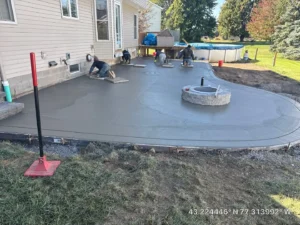
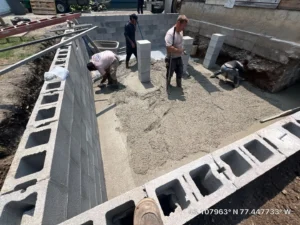
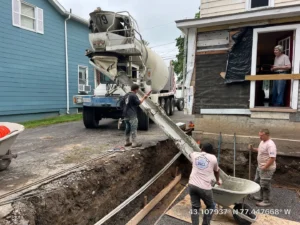
Most of a stamped concrete project is not the stamping. Site prep and forming take the bulk of the time, the pour and stamp happen fast and cannot be paused once started, and then the slab cures.
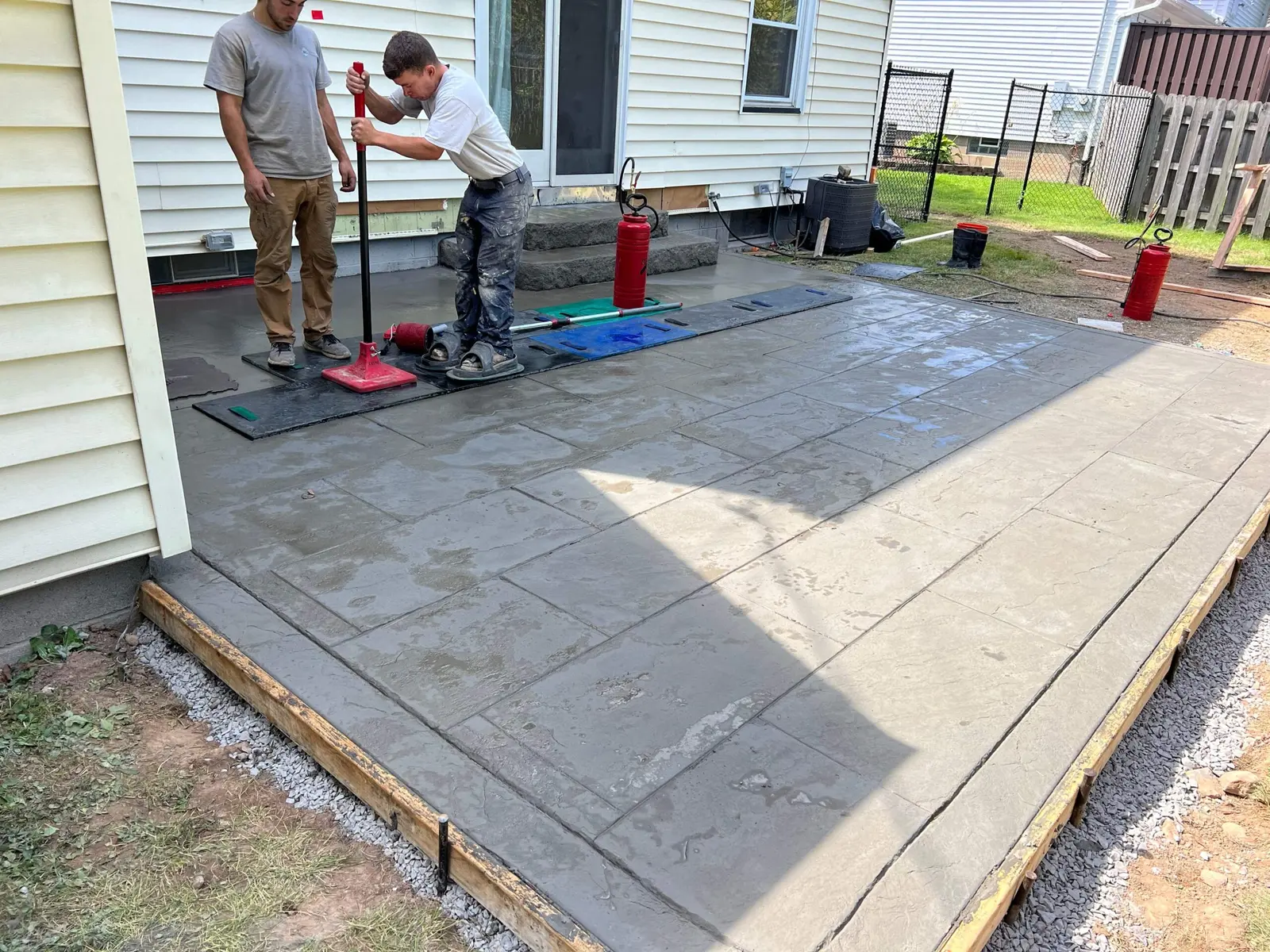
Two expectations worth setting now. First, pour day is weather-dependent and not reschedulable on short notice, because concrete does not wait for anyone once it is in the truck. Rain in the forecast moves the date. Second, curing is not the same as drying. The slab is walkable within a few days but the concrete keeps gaining strength for weeks, and sealing happens after it has cured properly rather than the moment it looks finished. Rushing the sealer traps moisture, and that shows up later as a cloudy finish.
The full step by step is on our stamped concrete contractor page.
So Should You Get One?
Yes, if the surface is going to be seen and you want it to look like something. Yes, if you like the look of stone or brick but not the joints, the weeds, or the resetting. Yes, if you would rather reseal every couple of years than maintain individual units forever.
Probably not, if the patio is small, hidden, and purely functional. Put the money into a well-built broom finish and spend the difference on something you will actually notice.
We would rather tell you that up front than sell you a finish you did not need. Estimates are free, and part of what you get is an honest answer about whether the upgrade is worth it on your specific yard.
Frequently Asked Questions
How long does a stamped concrete patio last in Rochester?
Twenty-five to thirty years or more when it is built correctly, which is the same lifespan as any properly installed concrete patio. The stamp does not shorten it. What shortens a patio's life is a poorly compacted base, insufficient thickness, or bad drainage, and none of those are related to the finish. The color and sealer need periodic attention, but that is maintenance rather than lifespan.
Is stamped concrete slippery when it is wet?
It can be, and this is a fair question that gets waved off too often. The stamp texture itself provides grip, but sealer is smoother than bare concrete and a heavily sealed surface can get slick. The fix is a non-slip additive mixed into the sealer, which is standard on pool decks and worth asking about on any patio with steps or a slope. It costs very little and it changes the feel underfoot noticeably.
Can you put a stamped concrete patio over an existing slab?
Sometimes. If the existing slab is structurally sound, meaning no major cracking, settlement, or drainage failure, a decorative stamped overlay can go directly over it, which saves demolition and haul-away. If the slab is failing underneath, an overlay transfers every one of those problems to the new surface and you have paid to hide them temporarily. We will tell you honestly which one you have, because we are the ones who have to stand behind it either way.
Will a stamped concrete patio crack?
All concrete moves, and control joints are how we decide where that movement shows up. A properly jointed slab develops its cracks inside those joints, where they are invisible and structurally harmless. That is the joints working, not failing. What you are trying to avoid is random cracking across the field, which comes from a poor base, wrong thickness, or joints placed badly. On a stamped surface, joints can also be cut along the pattern lines so they disappear into the design.
When is the best time to install a stamped patio in Rochester?
May through October. Concrete needs consistent overnight temperatures above 40 degrees Fahrenheit to cure properly, which sets the window. Booking in spring or early summer gets you on the schedule before peak season fills, and it means you have the patio for most of the season instead of the tail of it. Late-fall pours are possible but need extra curing protection, and there is a point in the fall where we will tell you to wait for spring rather than take your money for a compromised pour.